
Case Study:
eLearning Module for Internal Repair Case Transfers
Overview
Once reps hit the floor, the gap became impossible to ignore. Transfers were being mishandled — wrong team, wrong timing, or avoided altogether — and it was clear this wasn't a performance issue. Reflecting on it, the root cause pointed back to onboarding: no specific process for case transfers had ever been taught. Reps weren't making mistakes because they weren't trying — they were making mistakes because they were never given the information to get it right.
Option 2 — More direct / confident:
The gap became visible the moment reps moved from training to the floor. Case transfers were being mishandled — misdirected, mistimed, or skipped entirely — and the pattern was consistent enough to signal a systemic cause rather than individual error. The root cause was straightforward: onboarding never taught a specific transfer process. Reps were expected to figure it out on the job, and the SLA data reflected that.
After my time working as a Delivery Specialist, I noticed a gap in the curriculum that no time was being allocated on how to properly transfer cases to our internal repair teams. New reps were joining the floor without a clear understanding of the process, and the consequences were showing up in our day-to-day work — misdirected transfers, delayed resolutions, and SLA impacts that could be traced back to a training gap rather than a performance one.
I designed and built a self-directed eLearning module in Articulate Rise to close that gap — independently, from problem identification through to final build.
The Problem
New reps didn’t know how to transfer cases to our repair teams. This was a knowledge problem as the process was not covered in depth during onboarding, which meant new reps were making mistakes once they hit the floor.
The result was a pattern of preventable errors: cases transferred to the wrong team, transferred at the wrong time, or not transferred at all because reps weren't clear on the process. Each mistake delayed our repair resolution SLA, impacting the overall guest experience.
The fix wasn't coaching or supervision, it was information, delivered clearly and during onboarding
My Role
I identified this gap independently through overhearing and observing feedback new reps were receiving on the floor and initiated the project without a formal assignment. I served as the sole instructional designer, content developer, and eLearning builder — conducting my own analysis, designing the instructional framework, scripting the content, and building the final module in Articulate Rise.
This project is currently in the pitching stage, where I am for it to be formally adopted into the onboarding curriculum.
The Solution
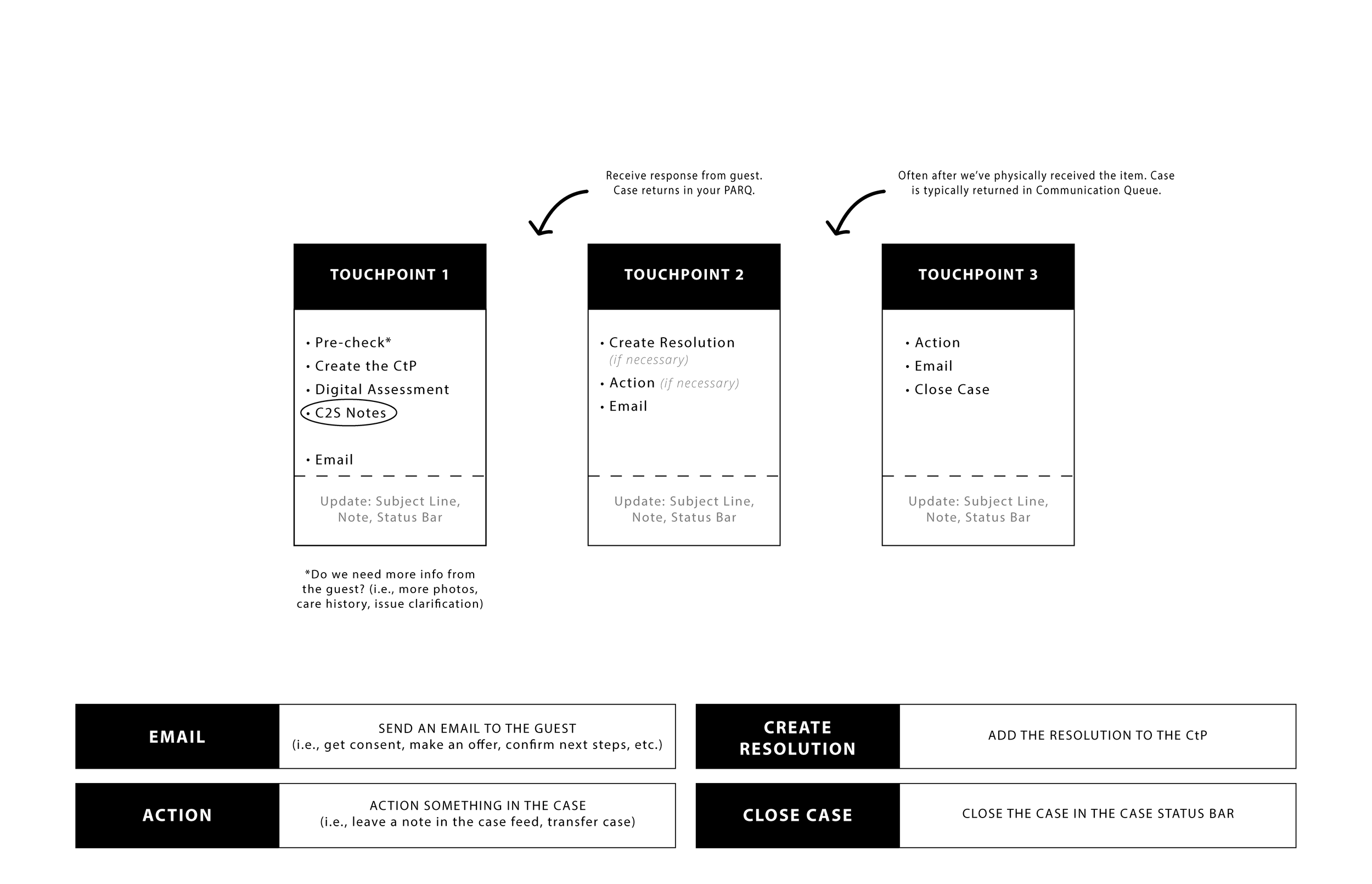
Generic Three Point Touchpoint Framework
I developed a three-step transfer framework that gave reps a clear mental model for every transfer decision:
How — the mechanics of executing a transfer correctly
Who — identifying the right internal repair team for the case
When — recognizing the right moment to transfer versus continuing to handle independently
The framework was built into a structured Articulate Rise module that included:
Scenario-based questions that placed learners in realistic transfer situations and required them to apply the framework to make a decision
Knowledge checks at key points to reinforce retention before moving forward
Audio and video elements to support different learning styles and reduce the cognitive load of text-heavy instruction
By grounding the content in real case situations rather than abstract rules, learners could practice the decision-making process in a low-stakes environment before encountering it on the floor.


Current Status & Anticipated Impact
The module is currently being pitched to leadership for inclusion in the onboarding curriculum. The case for adoption is straightforward: the training gap is documented, the errors it produces are visible in SLA data, and the solution is already built.
Once adopted, the module is designed to function as both an onboarding resource for new reps and a refresher tool for existing team members — giving the organization a reusable asset that addresses a recurring, costly problem at its root.
What This Project Demonstrates
Beyond the technical build, this project reflects a core competency that goes beyond tool proficiency: the ability to recognize a performance gap, diagnose its cause, and design a targeted solution without being asked to.
That distinction — between completing assigned training projects and initiating them — is what separates instructional designers who execute from those who add strategic value.
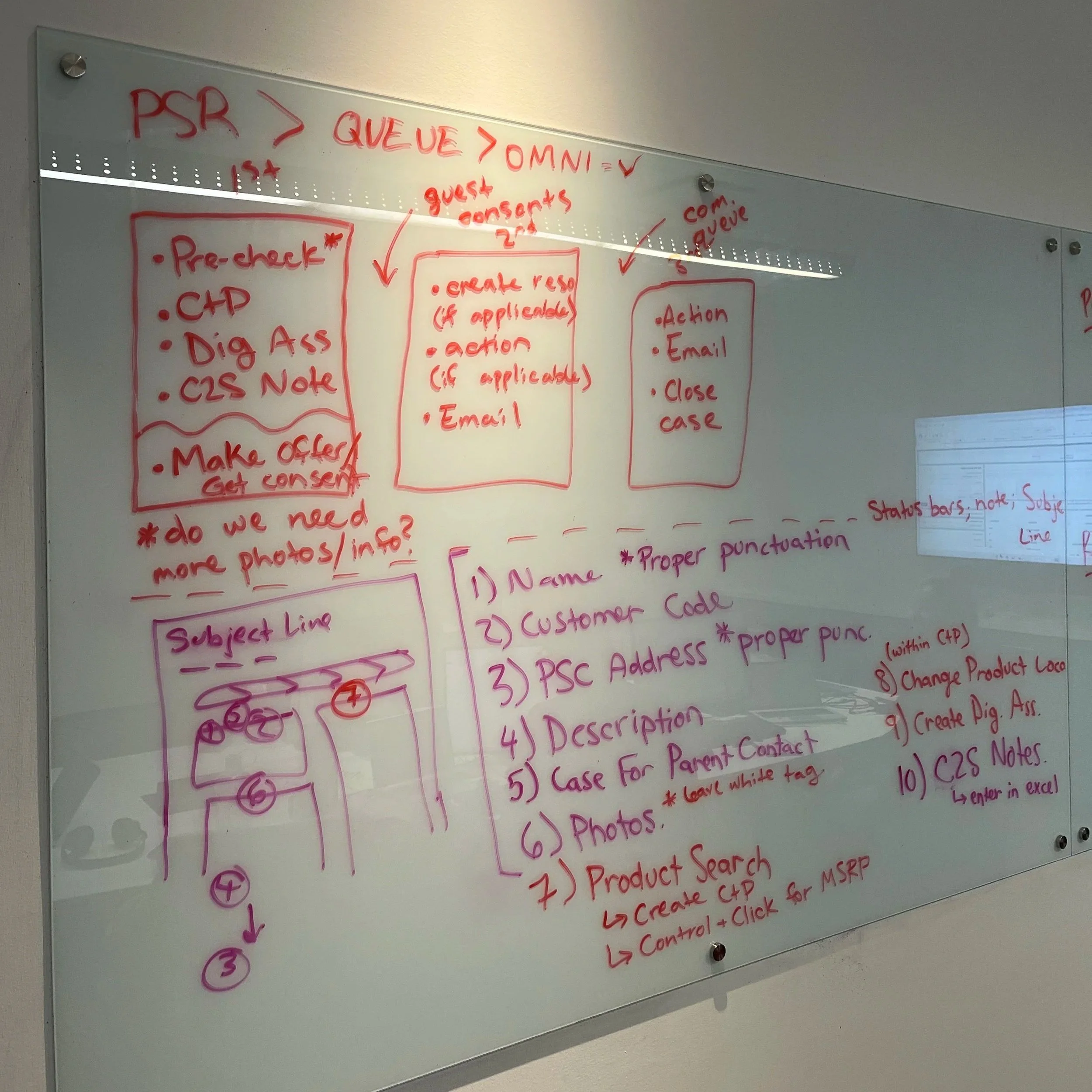
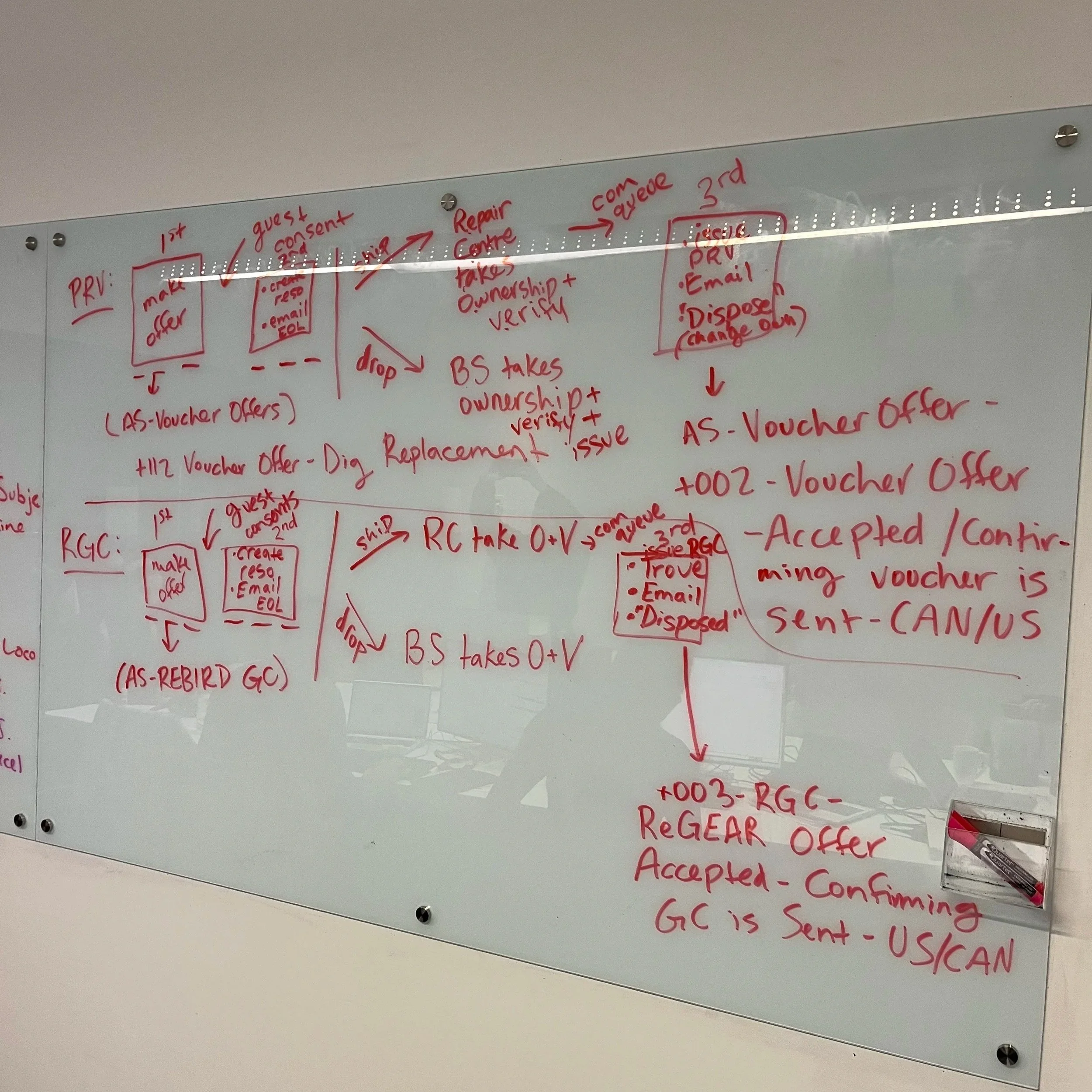
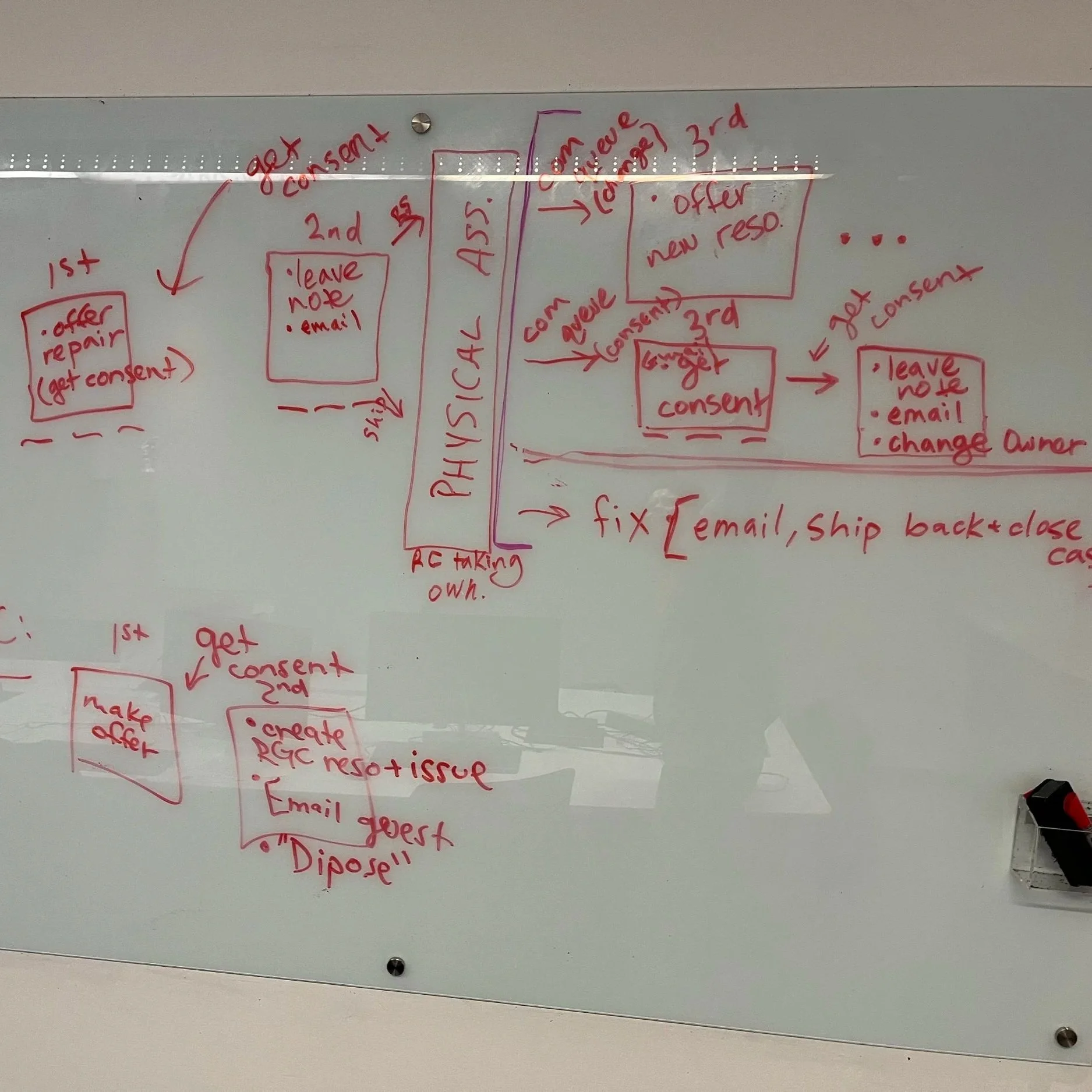
Example photos from the classroom:
Key Skills Demonstrated
Instructional Design · Needs Analysis · eLearning Development · Articulate Rise · Scenario-Based Learning ·
Performance Gap Analysis · Independent Project Management